iOS Setapp
iOS Setapp
Introduction: Setapp for iOS is a mobile extension of the Setapp subscription platform, created to expand the product beyond macOS and unlock new growth opportunities. While working on Setapp, I noticed that relying only on the desktop version significantly limited revenue potential. At the same time, global device usage data showed that the number of iOS mobile devices worldwide was roughly twice as high as the number of desktop and laptop computers, making mobile a strategically important direction for growth. In this project, I worked as a Product and UX Designer, focusing on defining the iOS strategy, designing compliant user flows, and navigating complex technical and legal constraints imposed by Apple.
Client
Setapp
Services
Product Design UI & UX Design Mobile UX Cross-platform Experience
Industries
SaaS
Date
January 2024
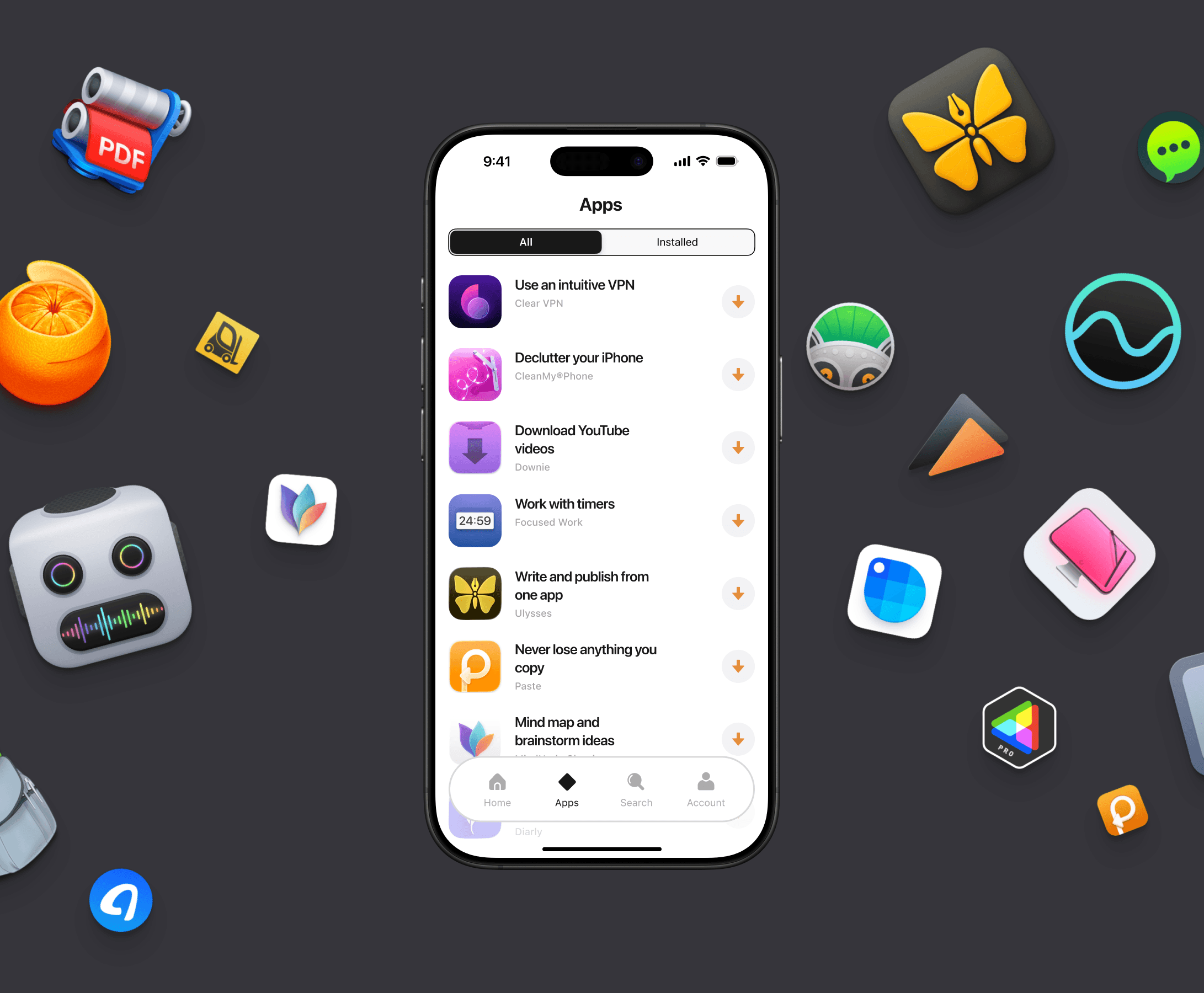
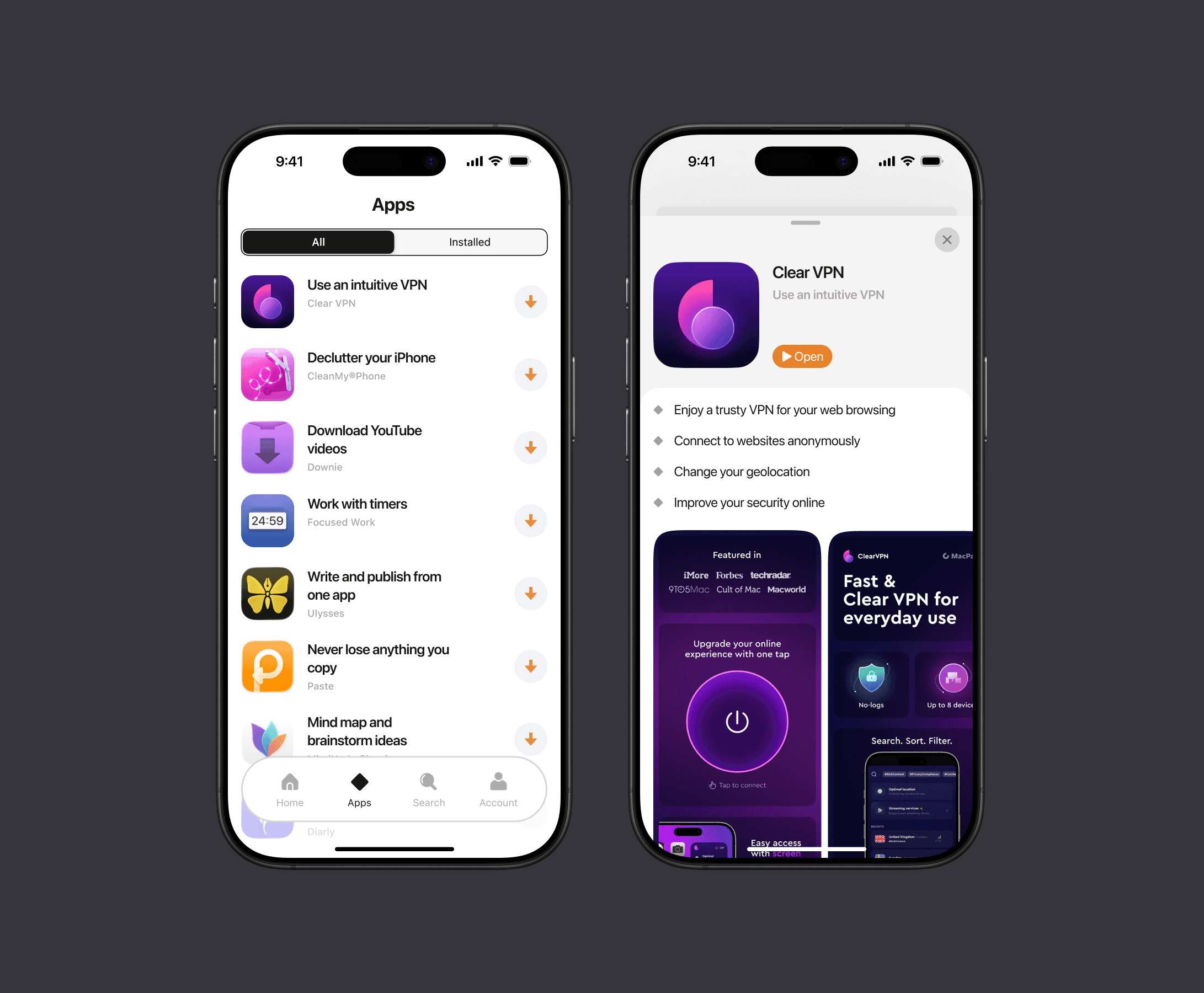
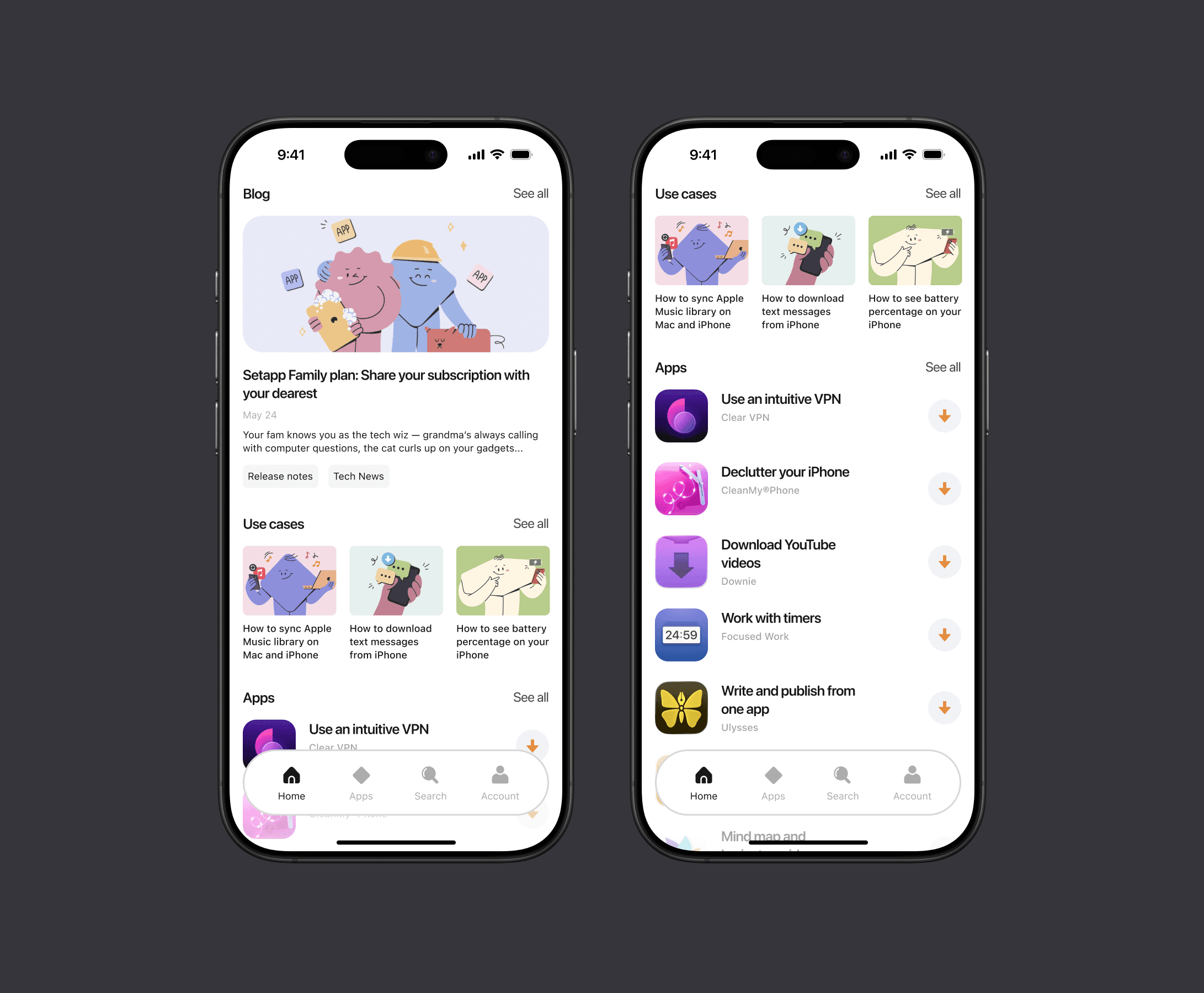
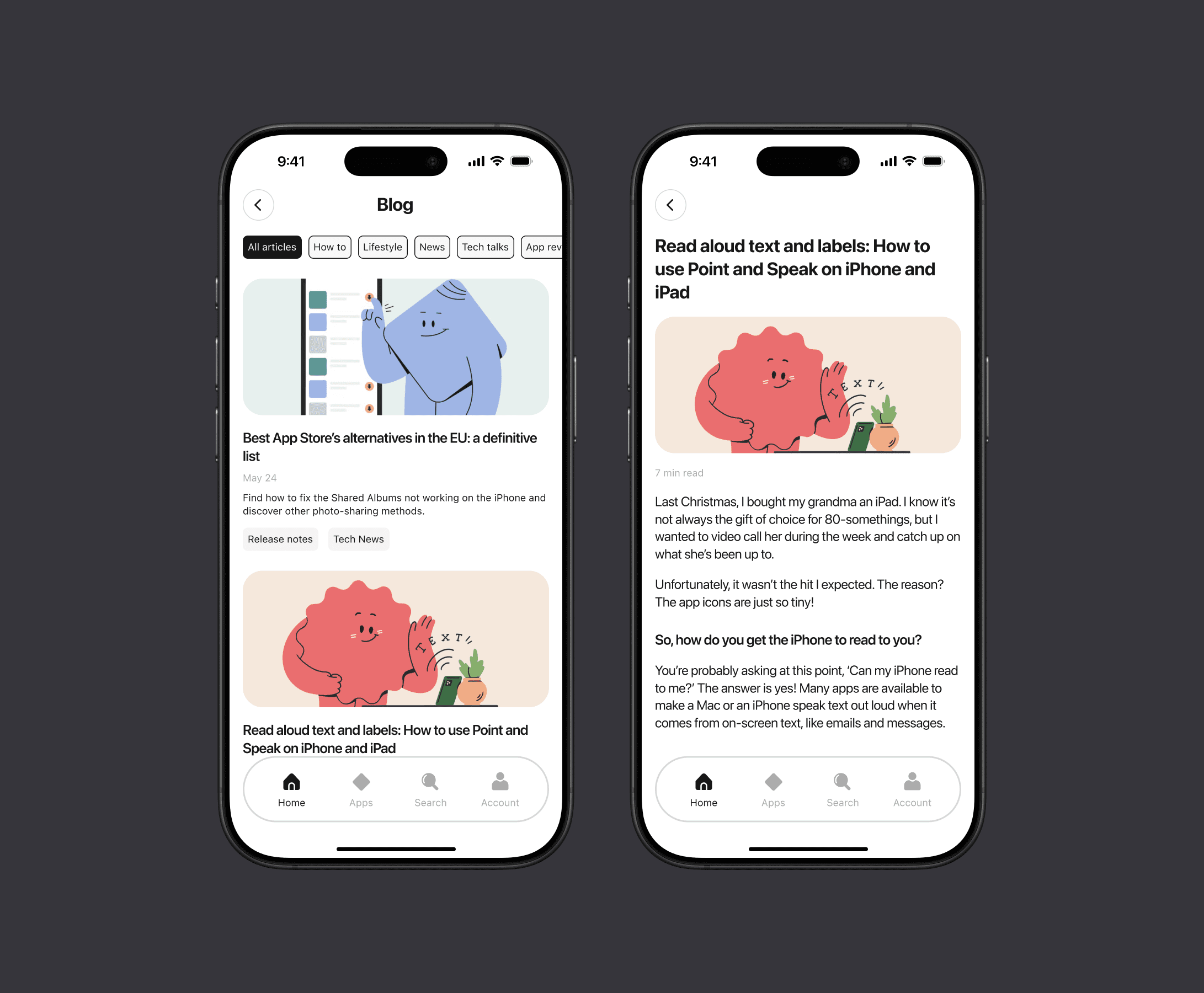
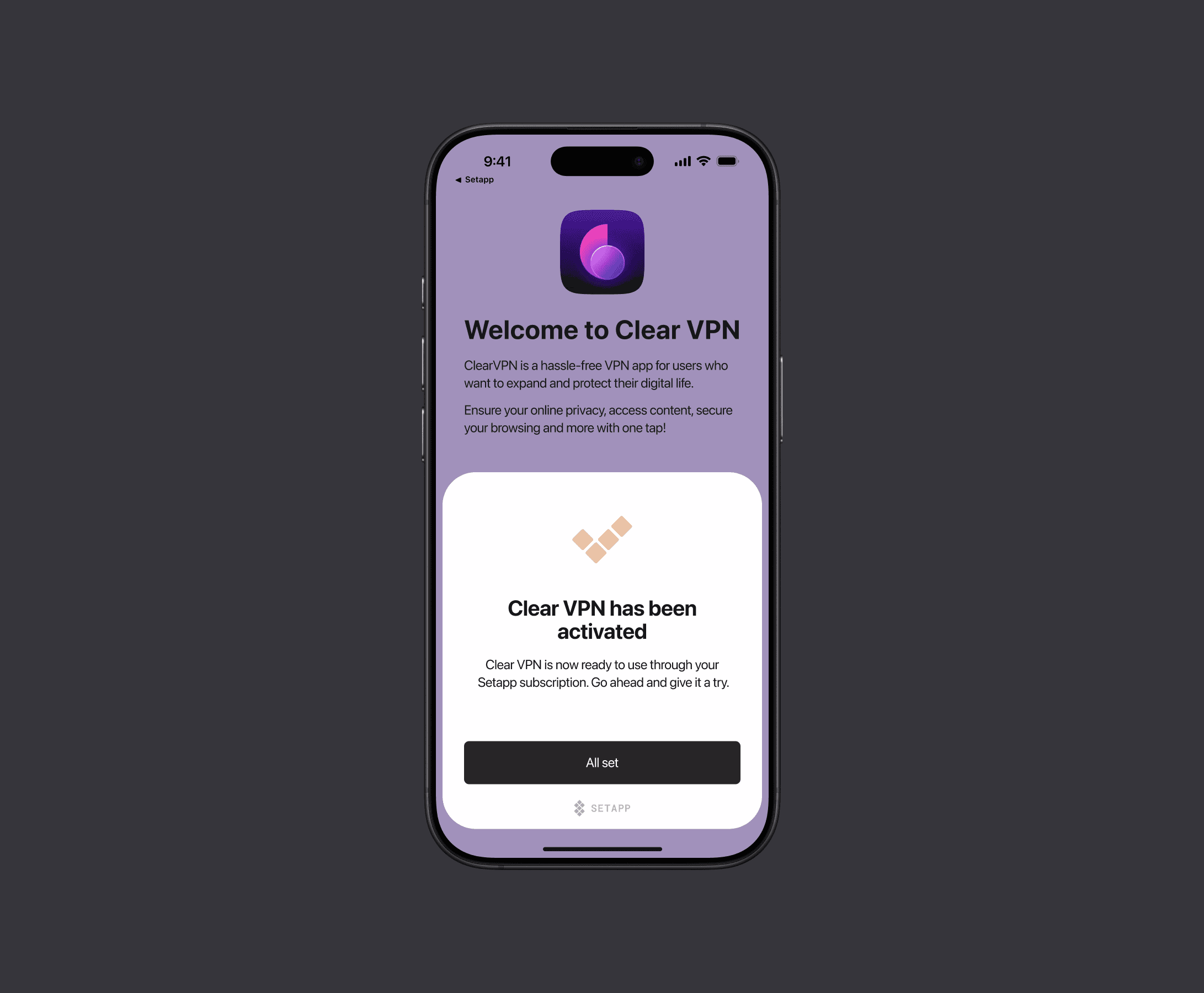
Problem: Setapp was a successful macOS subscription product, but its growth was constrained by the desktop-only model. Expanding to iOS was not a simple extension of the existing experience. Apple’s App Store policies prohibited publishing an in-app installer similar to the macOS version, and imposed strict limitations on subscription handling, authentication, and distribution. Another major challenge was the secure transfer and validation of subscription tokens between desktop and mobile environments. There were multiple technical approaches to token handling, each with different trade-offs in terms of usability, security, and compliance. Any incorrect decision could lead to App Store rejection or legal risks. Approach: After identifying the strategic opportunity in mobile, I initiated the exploration of an iOS version together with product, engineering, and legal teams. A significant part of the work involved deep research into Apple’s App Store guidelines and legal restrictions, as well as internal alignment on what was technically and legally feasible. We explored four different approaches to token transfer and installation confirmation, testing each option from both a UX and compliance perspective. These flows were validated through internal testing and iteration, with a strong focus on reducing user confusion while maintaining security and legal correctness. Constraints: The project was heavily constrained by Apple’s platform rules. In-app installers were not allowed, several onboarding patterns were restricted, and subscription logic had to strictly follow App Store requirements. Some product ideas that seemed logical from a user perspective were not permitted from a legal standpoint, which led to multiple redesign cycles. The dependency on cross-platform token validation and legal reviews slowed down iteration and required close collaboration across design, engineering, and legal teams. Solution: The final solution was a mobile-first version of Setapp that respected Apple’s ecosystem while still delivering clear value to users. Instead of copying the macOS experience, we designed a simplified iOS product with transparent onboarding, compliant subscription flows, and clear explanations of how access works on mobile. I worked on defining and refining the final token validation and installation confirmation flow, ensuring that users could activate their access with minimal friction and high trust. Special attention was paid to messaging and UX clarity, helping users understand why certain limitations existed on iOS compared to desktop. Results: After launch, testing and iteration showed strong early impact. The number of successful installations and the conversion to paid subscriptions increased by approximately 35% in the first months compared to earlier mobile experiments and baseline assumptions. The iOS version opened a new growth channel for Setapp and validated the strategic decision to expand beyond desktop, despite strict platform limitations. The project also helped the team build internal expertise in working with complex App Store constraints, legal requirements, and cross-platform subscription logic. UX Deliverables: The work included mobile user flows, onboarding scenarios, token validation and confirmation flows, subscription and access management screens, and alignment between macOS and iOS experiences.